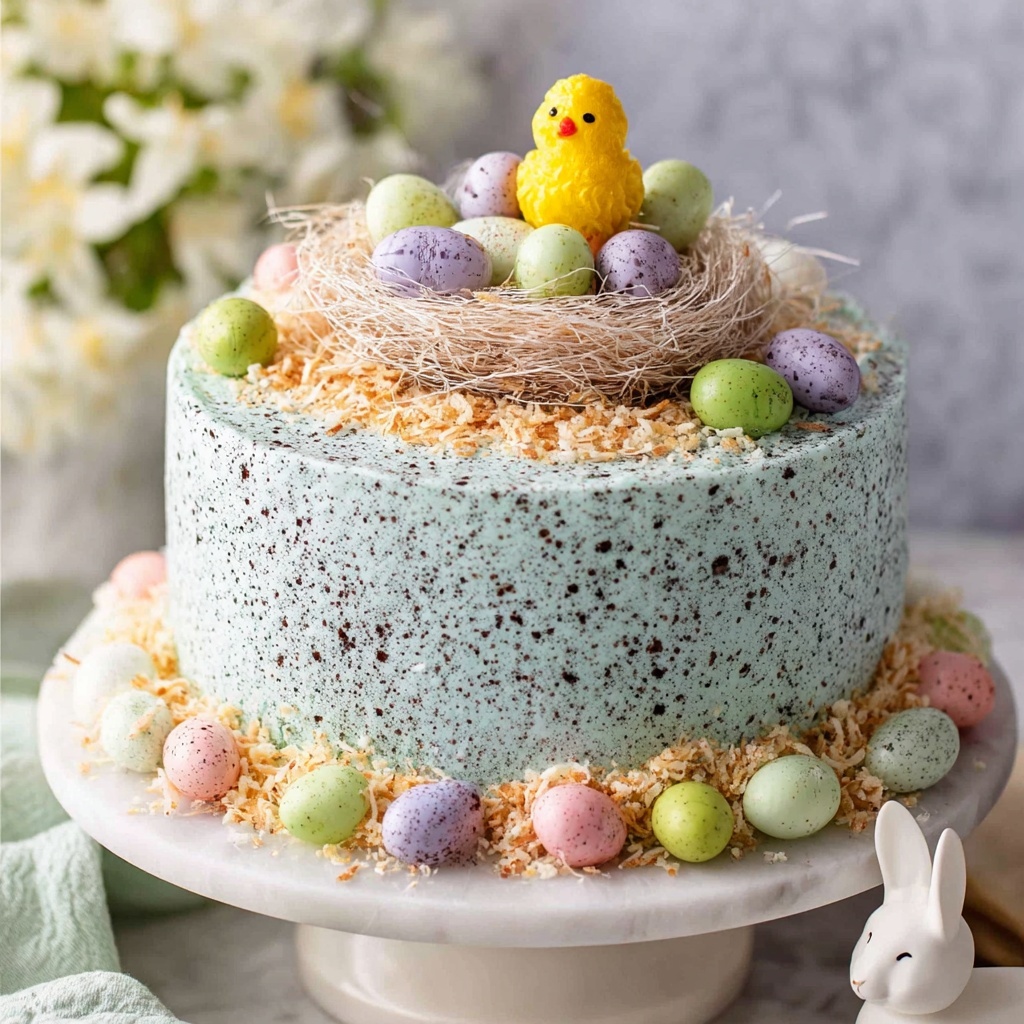
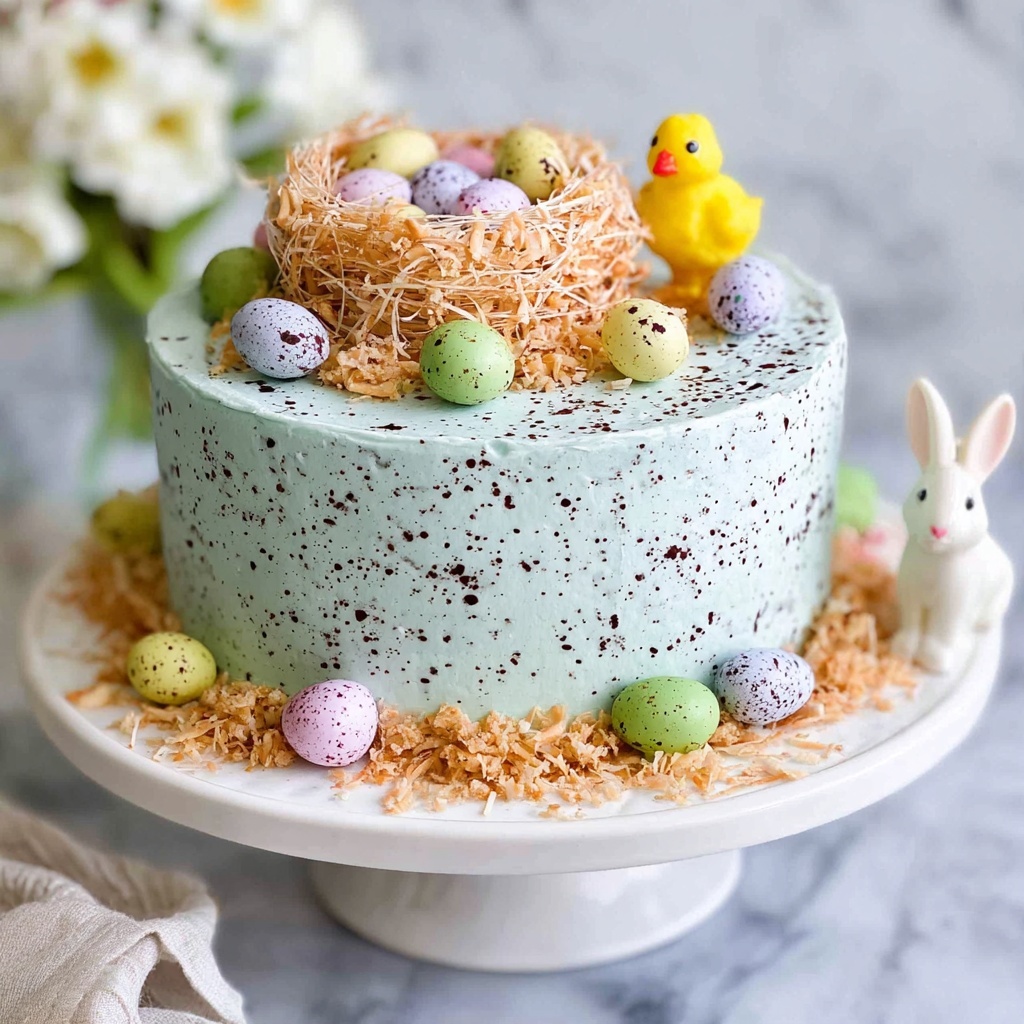
If you are looking for a show-stopping centerpiece to celebrate spring’s brightest holiday, this Easter Cake with Coconut Flakes and Pastel Egg Decorations Recipe is an absolute must-try. It’s not just a cake; it’s a joyous celebration of texture, flavor, and color, combining tender vanilla layers with fluffy, lightly toasted coconut flakes and charming pastel egg accents that bring the whole creation to life. Whether you’re baking for family, friends, or your own sweet tooth, this recipe promises to fill your kitchen with the warmest vibes and your plate with unforgettable taste.
Ingredients You’ll Need
Simple, yet thoughtfully chosen ingredients are the heart of this cake. Each plays a crucial role in achieving that perfect balance of moistness, sweetness, and visual appeal. From the smooth vanilla cake layers to the buttercream frosting and the toasty coconut topping, every component adds its own magic.
- Vanilla Cake Layers: Use a classic 3-layer vanilla cake or any 20cm/8″ cake of your choice, providing the soft, spongy base for your Easter masterpiece.
- Unsalted Butter: 340g of softened butter delivers richness and creaminess to the frosting, helping it hold its shape beautifully.
- Soft Icing Sugar: 750g sifted powdered sugar adds just the right amount of sweetness and smoothness to your buttercream.
- Vanilla Extract: 3 teaspoons for that deeper, comforting aroma that complements the cake perfectly.
- Blue Gel Food Colouring: A couple of drops to tint your frosting with a subtle and inviting pastel blue tone, evoking springtime skies.
- Salt: A tiny 1/8 teaspoon pinch to balance flavors and enhance sweetness.
- Cocoa Powder: 1 tablespoon adds a hint of depth and contrast to your frosting if you choose a mocha accent.
- Boiling Water: 3 tablespoons help dissolve and blend the cocoa powder smoothly into your frosting.
- Toothbrush or Basting Brush: Perfect for applying delicate finishing touches or creating texture with your coconut flakes.
- Coconut Flakes: 2 cups of flakes or shaved coconut, toasted to golden perfection for a nutty crunch and beautiful appearance.
- Small Easter Eggs: 200g of pastel-colored speckled eggs make the ideal whimsical topping, instantly transforming the cake into a festive delight.
How to Make Easter Cake with Coconut Flakes and Pastel Egg Decorations Recipe
Step 1: Level and Chill Your Cake Layers
Begin by trimming the tops of your cake layers to create a perfectly flat surface. This simple step is key when stacking multiple layers to ensure the cake looks neat and professional. Once leveled, pop the layers into the fridge to chill thoroughly. Cooling the cake layers makes them firmer, which helps prevent crumbs from mixing into your frosting during assembly — a game changer for that smooth finish.
Step 2: Toast the Coconut Flakes
Preheat your oven to 160°C (325°F) or 140°C if you’re using a fan-assisted oven. Spread your coconut flakes evenly on a baking tray and bake them for 6 to 10 minutes, stirring every couple of minutes. Watch closely as the flakes turn a gorgeous golden hue. Toasting the coconut not only adds a delightful crunch but enhances its natural nutty flavor, creating an irresistible contrast to the soft cake and creamy frosting.
Step 3: Prepare the Buttercream Frosting
While the coconut cools, it’s time to whip up your frosting. Using the softened unsalted butter, beat it until fluffy and creamy. Gradually sift in the icing sugar to avoid lumps, followed by vanilla extract and the delicate pinch of salt. If you want that subtle pastel blue tint, carefully add your blue gel food coloring—start with a drop or two and increase as desired to get just the right shade. For those who love a hint of chocolate, stir in your cocoa powder dissolved in boiling water to create a lightly mocha-flavored frosting that complements the vanilla layers beautifully.
Step 4: Assemble the Cake Layers
Take the chilled cake layers and spread a generous amount of buttercream between each one, stacking them carefully. Once all layers are assembled, cover the top and sides of the cake with a smooth, even layer of frosting. Don’t worry if your first coat isn’t perfect—it’s the crumb coat that locks everything in before the final magical touches.
Step 5: Apply the Coconut Flakes
Using your hands or a small spatula, gently press the toasted coconut flakes onto the sides and top of the frosted cake. The warm coconut provides an inviting texture and lovely visual contrast against the smooth pastel frosting. This is where your cake really starts to look like a festive Easter treat!
Step 6: Decorate with Pastel Easter Eggs
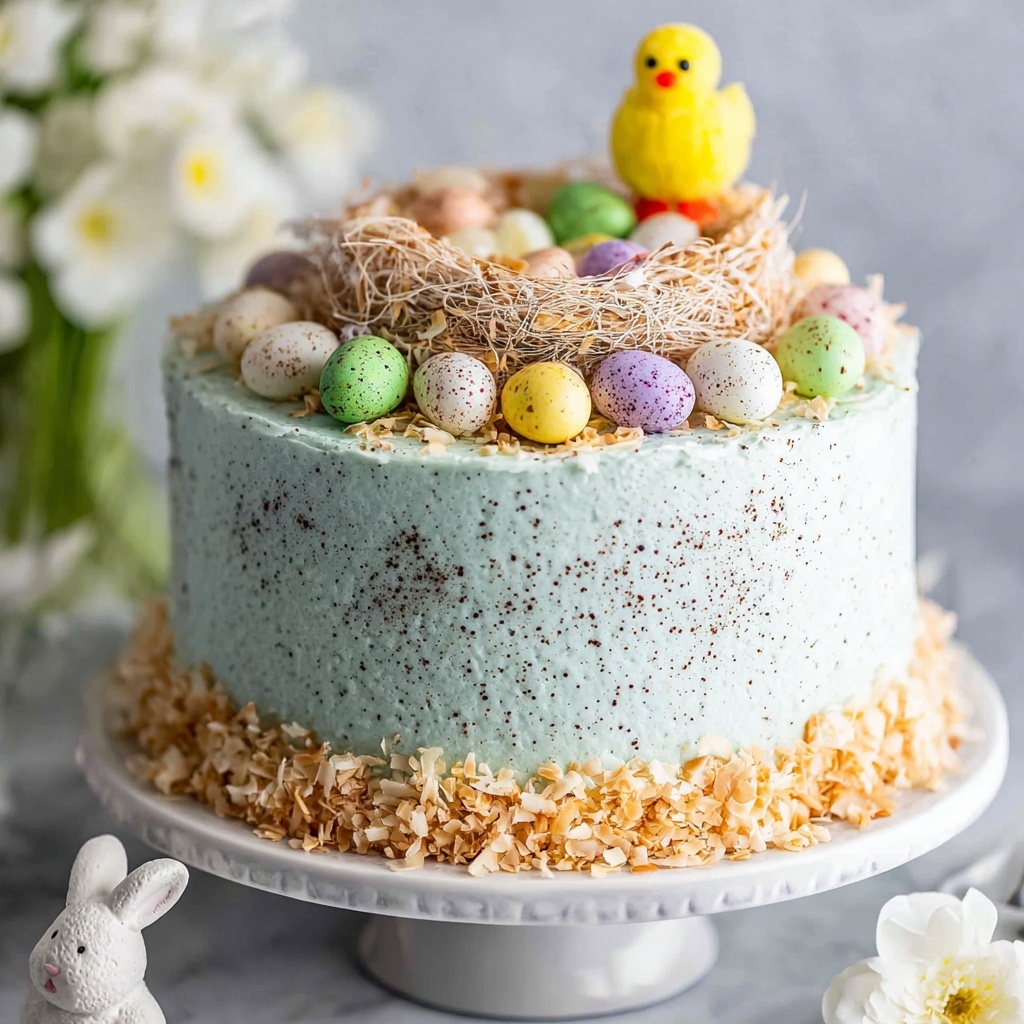
For the grand finale, arrange your small pastel-colored Easter eggs artistically across the top of the cake. Their speckled colors add whimsy and charm, making the cake look almost too pretty to eat—almost! These little accents bring the entire creation together, perfectly capturing the cheerful spirit of Easter celebrations.
How to Serve Easter Cake with Coconut Flakes and Pastel Egg Decorations Recipe
Garnishes
Besides the toasted coconut and pastel eggs already decorating the cake, consider sprinkling a few edible flower petals, like violets or pansies, for an extra pop of spring freshness. A light dusting of powdered sugar can also add a soft “morning dew” effect that’s visually stunning at any Easter brunch.
Side Dishes
This cake pairs wonderfully with fresh fruit like berries or sliced peaches to cut through the richness. For a more indulgent spread, serve alongside creamy vanilla custard or a dollop of whipped cream with a hint of lemon zest to brighten up every bite. A cup of chamomile or jasmine tea also complements the delicate flavors beautifully.
Creative Ways to Present
Serving your Easter Cake with Coconut Flakes and Pastel Egg Decorations Recipe on a rustic wooden cake stand instantly elevates the festive feel. Surround it with mini nests made from shredded coconut dyed green with food coloring and place a few leftover pastel eggs inside. You can even wrap pastel-colored ribbons around the cake layers or present individual slices on mismatched vintage plates for a charming, whimsical vibe.
Make Ahead and Storage
Storing Leftovers
Cover your cake loosely with plastic wrap or place it in an airtight cake container to keep it fresh overnight or for up to 3 days in the refrigerator. The coconut flakes might soften slightly but will still add lovely texture and flavor on each bite.
Freezing
To freeze, wrap the cake tightly in plastic wrap and then in aluminum foil to prevent freezer burn. It will keep well for up to a month. When ready to enjoy, thaw it carefully in the refrigerator overnight before serving to maintain its delicate texture and flavor.
Reheating
This cake is best enjoyed chilled or at room temperature. If you prefer a warm slice, gently microwave a slice for about 10 seconds. Be cautious though, as overheating can melt the frosting and alter the delicate balance of texture.
FAQs
Can I use shredded coconut instead of coconut flakes?
Shredded coconut can be used, but coconut flakes create a nicer texture and toast more evenly. If using shredded coconut, watch your toasting time closely to avoid burning.
What kind of cake layers work best for this recipe?
A classic vanilla or butter cake is ideal, but you can experiment with almond or coconut-flavored cakes to add more dimension to the flavor. Just make sure the layers are sturdy enough to hold up the frosting and decorations.
How can I make pastel colors if I don’t have gel food coloring?
Gel coloring provides the best vibrancy without altering the frosting’s consistency, but if you only have liquid food coloring, add it sparingly as it may thin out your frosting. Alternatively, natural colorants like butterfly pea flower powder (for blue) work well too.
Is it possible to make this cake vegan?
Yes! Substitute butter with vegan margarine or coconut oil, use plant-based milk in your cake layers, and opt for a vegan cake recipe. Just ensure your pastel eggs and additional decorations are vegan-friendly.
How far in advance can I decorate the cake?
It’s best to decorate on the day you plan to serve the cake to keep coconut flakes crisp and eggs looking fresh. However, the cake can be assembled and refrigerated overnight if needed, just add the final decorations right before serving.
Final Thoughts
Baking and decorating this delightful Easter Cake with Coconut Flakes and Pastel Egg Decorations Recipe is a joyful experience that’s sure to create lasting memories around your table. Its beautiful layers, rich textures, and festive spirit come together effortlessly, making it a cherished recipe to return to year after year. Don’t be afraid to get creative with your decorations and flavors—after all, Easter is all about celebrating new beginnings and joyful moments. Happy baking!
Print
Easter Cake with Coconut Flakes and Pastel Egg Decorations Recipe
- Prep Time: 45 minutes
- Cook Time: 30 minutes
- Total Time: 1 hour 15 minutes
- Yield: 12 – 16 servings
- Category: Dessert
- Method: Baking
- Cuisine: Western
Description
Delight in this beautifully decorated Easter Cake featuring soft vanilla layers, a rich and creamy buttercream frosting tinted with a touch of blue, and topped with toasted coconut flakes and pastel-colored speckled Easter eggs. Perfect for festive celebrations, this cake combines classic flavors with eye-catching decoration.
Ingredients
Cake
- 1 Vanilla Cake, 3 layers (or other 20cm/8″ cake of choice, Note 1)
Buttercream Frosting
- 340g (3 sticks) unsalted butter, 1.25cm / ½” cubes, softened to 18°C/64°F (Note 3)
- 750g (1.5 lb or 6 cups) soft icing sugar / powdered sugar, sifted
- 3 tsp vanilla extract
- 1 – 2 drops blue gel food colouring (or 1 – 2 tsp blue food colouring, Note 4)
- 1/8 tsp salt
- 1 tbsp cocoa powder (unsweetened or sweetened, doesn’t matter)
- 3 tbsp boiling water
Toppings
- 2 cups coconut flakes (or shaved coconut)
- 200g (7oz) small Easter eggs (pastel coloured speckled ones, Note 5)
Tools
- Toothbrush (or basting brush)
Instructions
- Level: Trim the top of the cake layers if necessary to create flat, even surfaces for stacking and frosting. This step enhances the appearance and stability of the finished cake.
- Chill: Place the leveled cake layers in the refrigerator until they are thoroughly chilled. Chilling helps prevent crumbs from mixing into the frosting during assembly and makes frosting the cake easier.
- Toast Coconut: Preheat the oven to 160°C/325°F (140°C fan). Spread the coconut flakes evenly on a baking tray. Bake for 6 to 10 minutes, stirring every couple of minutes to ensure even toasting. The coconut should turn golden brown. Remove from the oven and let it cool completely.
- Prepare Buttercream: In a large mixing bowl, beat the softened butter until creamy. Gradually add the sifted icing sugar and continue to beat until smooth and fluffy. Mix in the vanilla extract and blue gel food colouring to achieve a soft pastel blue hue.
- Add Cocoa Mixture: In a smaller bowl, combine the cocoa powder and boiling water, stirring until fully dissolved and smooth. Slowly add this mixture to the buttercream along with the salt, and beat everything together to combine evenly. This gives the frosting a subtle chocolate undertone and balanced flavor.
- Assemble & Decorate: Remove the chilled cake layers from the refrigerator. Spread a layer of buttercream between each cake layer and stack them carefully. Coat the entire cake with a thin crumb coat of buttercream and chill briefly to set. Apply a final thick layer of frosting to the cake, smoothing it out evenly. Using the toothbrush or basting brush, lightly brush some toasted coconut flakes onto the cake sides and top. Finish by decorating the cake with the small pastel Easter eggs placed evenly around and on the top of the cake for a festive look.
Notes
- Note 1: You can use a homemade vanilla sponge cake or a store-bought vanilla cake layered and trimmed to 20cm/8″ diameter.
- Note 3: Softened butter should be at room temperature (around 18°C/64°F) for best buttercream texture.
- Note 4: Gel food coloring provides more vivid color without thinning the frosting; use liquid coloring if gel is unavailable.
- Note 5: Small pastel colored speckled Easter eggs add festive charm; feel free to substitute with mini chocolate eggs or edible Easter decorations.