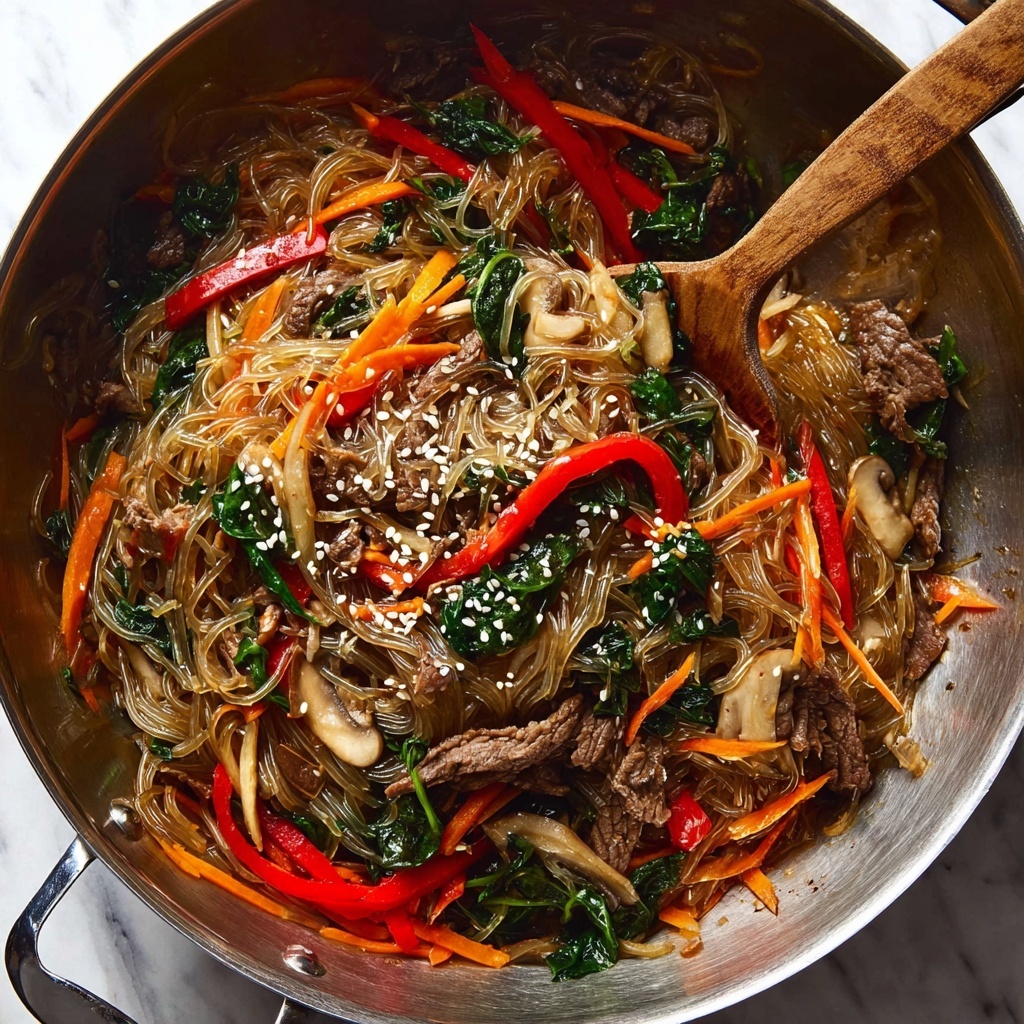
If you are looking to dive into the vibrant world of Korean cuisine, Japchae is an absolute must-try. This Japchae – Korean Sweet Potato Noodles with Beef and Vegetables Recipe is a colorful, flavorful celebration of textures and tastes. Tender beef meets chewy, glossy sweet potato noodles, while crisp vegetables bring freshness to every bite. This dish perfectly balances savory and sweet, offering a satisfying experience that feels both comforting and festive. I promise, once you make this Japchae recipe, it will quickly become one of your favorite go-to meals for any occasion.
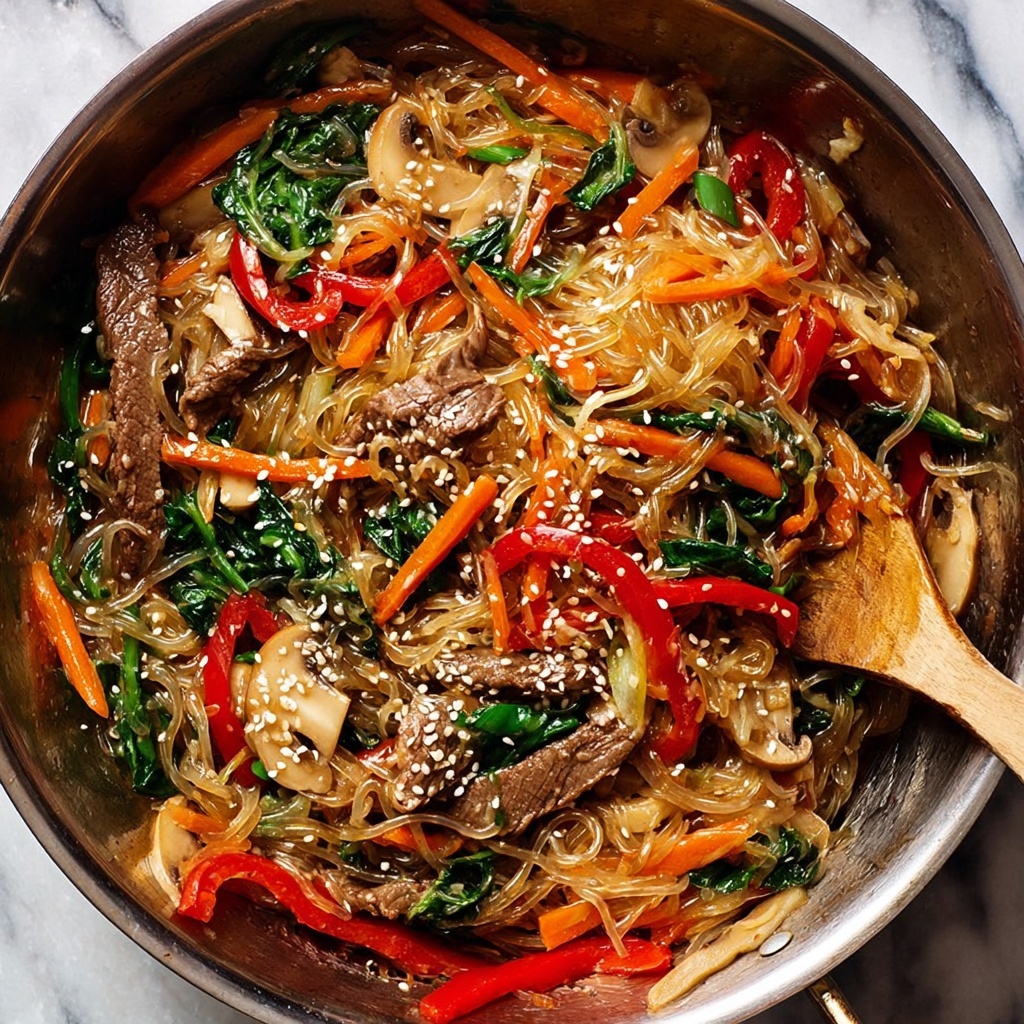
Ingredients You’ll Need
Don’t let the list seem long; these ingredients are straightforward and each one plays a crucial role in creating the harmony of flavors, textures, and colors that make Japchae so special.
- 600g/1.2lb bone-in beef short ribs or 300g/10oz boneless: The beef brings rich, meaty flavor, perfect for a hearty Japchae.
- 300g/10oz scotch fillet or boneless rib eye: Tender steak adds another layer of juicy, melt-in-your-mouth texture.
- 2 tsp soy sauce: Provides salty umami depth, essential for authentic seasoning.
- 2 tsp white sugar: Balances savory soy sauce with a gentle sweetness.
- 2 tsp finely minced garlic: Fresh garlic adds aromatic warmth and brightness.
- 1/2 tsp black pepper: A subtle heat that wakes up the palate.
- 1/4 cup soy sauce: Used in the marinade and sauce, this intensifies flavor.
- 1 1/2 tbsp sesame oil: Adds a nutty, fragrant finish typical of Korean dishes.
- 1/2 tsp cooking or kosher salt: Brings out the natural tastes of ingredients.
- 250g/8oz sweet potato noodles (dangmyeon), dried: These translucent noodles have a wonderful chewy texture that defines Japchae.
- 4 tbsp vegetable oil: For stir-frying vegetables to tender crisp perfection.
- 1 onion, sliced into wedges: Adds sweetness and crunch.
- 3 green onion stems, separated white & green parts: A fresh, subtle onion flavor works in both cooking and garnishing.
- 200g/7oz fresh shiitake mushrooms, sliced: Earthy mushrooms add umami and a meaty bite.
- 2 carrots, peeled and julienned: Bright orange batons inject natural sweetness and color.
- 1 red capsicum (bell pepper), sliced: Brings vibrant color and crispness.
- 4 1/2 cups baby spinach: Adds delicate green freshness and a slight crunch.
- 2 tbsp white sesame seeds: A toasty crunch sprinkled on top for eye appeal and flavor.
How to Make Japchae – Korean Sweet Potato Noodles with Beef and Vegetables Recipe
Step 1: Preparing the Beef
Start by marinating the beef in a mixture of soy sauce, sugar, minced garlic, and black pepper. This simple marinade infuses the meat with a perfect balance of savory and sweet. Once the beef has absorbed these flavors, quickly pan-fry it until it’s just cooked through and caramelized on the outside. This step ensures your beef remains juicy and tender, complementing the noodles beautifully.
Step 2: Cooking the Sweet Potato Noodles
While the beef is resting, boil the sweet potato noodles according to the package instructions, usually 6-7 minutes, until they’re tender but still have a chewy bite. Drain and rinse the noodles under cold water to stop the cooking and remove the stickiness. Toss them with a bit of sesame oil so they don’t clump together and to add a subtle nuttiness—this is key for achieving that authentic Japchae texture.
Step 3: Stir-Frying the Vegetables
In a large pan or wok, heat vegetable oil and stir-fry the onions, carrots, capsicum, and shiitake mushrooms one by one or together, depending on your preference, just until they soften but still retain their vibrant colors and crunch. Then throw in the baby spinach and cook until it wilts just slightly. Each vegetable brings its own unique texture and flavor, creating layers of excitement in every forkful of Japchae.
Step 4: Combining Everything
Finally, add the cooked noodles and beef back into the pan with the vegetables. Pour in the remaining soy sauce, sesame oil, sugar, garlic, salt, and pepper to taste. Toss everything gently but thoroughly over low heat so that every ingredient is evenly coated and heated through. It’s important to keep the noodles glossy without drying them out—this is where the magic of Japchae happens.
How to Serve Japchae – Korean Sweet Potato Noodles with Beef and Vegetables Recipe
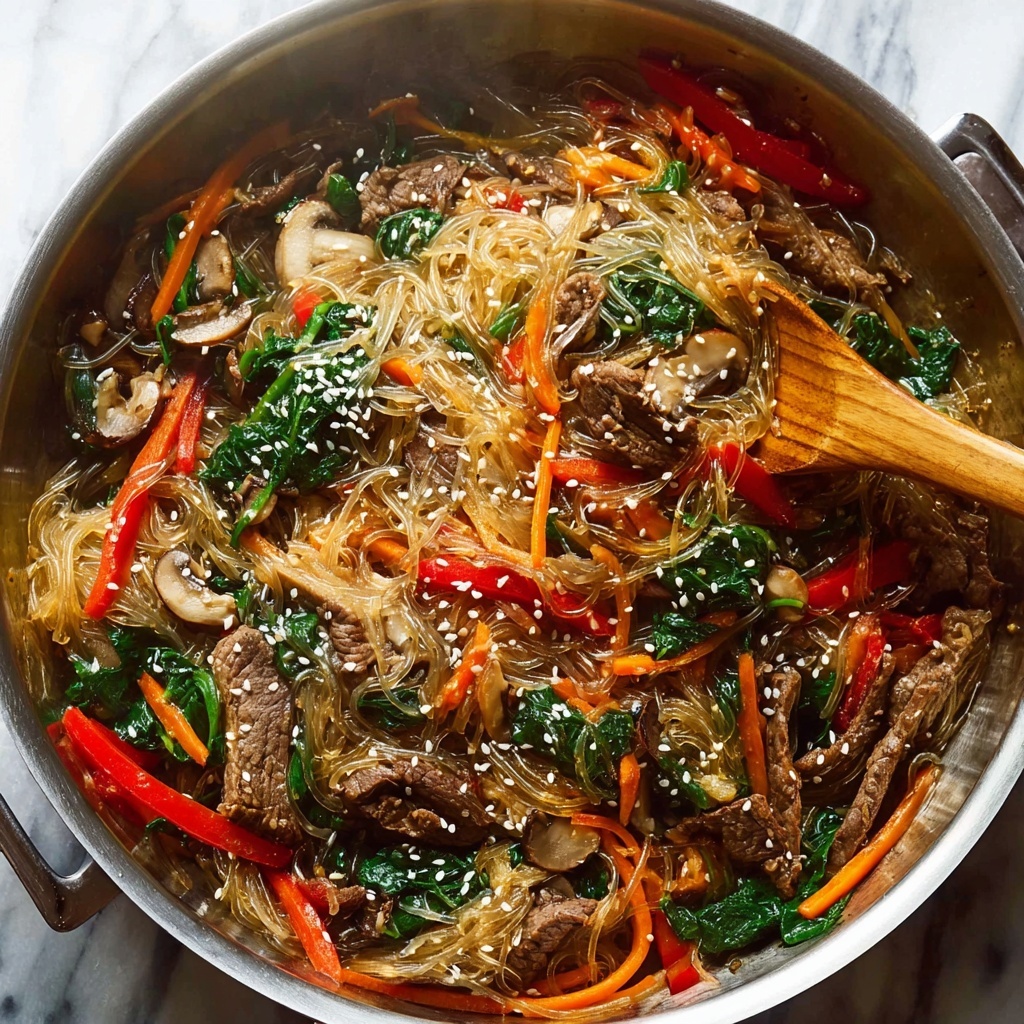
Garnishes
Sprinkling toasted white sesame seeds on top adds that perfect nutty crunch and a lovely visual contrast. For an extra touch, thin slices of green onion white parts or some toasted seaweed strips can enhance both flavor and presentation.
Side Dishes
This dish shines on its own but pairs wonderfully with Korean staples like kimchi, pickled radish, or a simple bowl of steamed rice. These sides add acidity and refresh your palate alongside the hearty, sweet, and savory noodles.
Creative Ways to Present
Try serving Japchae in individual lettuce wraps for a fun handheld twist or plate it as a colorful noodle salad with a drizzle of extra sesame oil and a sprinkle of chili flakes. It also makes an incredible centerpiece for potlucks or festive gatherings because of its vivid color palette and inviting aroma.
Make Ahead and Storage
Storing Leftovers
Japchae keeps beautifully in an airtight container in the refrigerator for up to 3 days. Since the noodles soak up sauce as they rest, add a splash of sesame oil or a bit of water when reheating to revive their supple texture.
Freezing
While you can freeze Japchae, it’s best enjoyed fresh because freezing may change the noodle texture slightly. If freezing, place it in a freezer-safe bag and consume within one month for the best quality.
Reheating
Reheat Japchae gently in a skillet or microwave. Add a splash of water or broth and a touch more sesame oil to refresh the noodles and vegetables, ensuring they stay tender and flavorful rather than dry or rubbery.
FAQs
Can I make Japchae vegetarian?
Absolutely! Simply omit the beef and add extra mushrooms, tofu, or even thinly sliced zucchini for protein and substance. The key is to keep the balance of savory and sweet seasoning, and the dish remains just as delicious.
Where can I buy sweet potato noodles?
You can find sweet potato noodles, or dangmyeon, at most Asian grocery stores or online. They come dried and are easy to cook following package instructions.
Is Japchae served hot or cold?
Japchae is traditionally served warm or at room temperature, making it versatile for meals or as a party dish. It’s just as tasty slightly chilled, especially during warmer months.
Can I prepare Japchae in advance?
Yes, you can prepare the components ahead of time and combine them just before serving to maintain the noodles’ texture and the vegetables’ crispness. This makes it an excellent dish for entertaining or meal prepping.
What type of beef works best for Japchae?
Tender cuts like rib eye, scotch fillet, or boneless short ribs work wonderfully. The important part is marinating well for flavor and cooking quickly to keep the beef juicy and tender.
Final Thoughts
This Japchae – Korean Sweet Potato Noodles with Beef and Vegetables Recipe is more than just a meal; it’s a joyful culinary experience that captures the heart of Korean flavors. With its irresistible combination of savory, sweet, and nutty notes, topped off by colorful, crisp vegetables, it’s sure to win over anyone trying it. I wholeheartedly encourage you to try making Japchae at home—you might just discover your new favorite dish to share with loved ones!
Print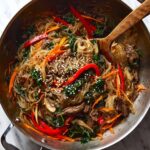
Japchae – Korean Sweet Potato Noodles with Beef and Vegetables Recipe
- Prep Time: 20 minutes
- Cook Time: 15 minutes
- Total Time: 35 minutes
- Yield: 5 servings
- Category: Main Course
- Method: Stovetop
- Cuisine: Korean
- Diet: Halal
Description
Japchae is a classic Korean dish featuring sweet potato starch noodles stir-fried with tender beef and a medley of vibrant vegetables, all tossed in a savory-sweet soy sauce and sesame oil dressing. This colorful and flavorful dish is perfect as a family meal or a party favorite, combining the unique chewy texture of dangmyeon noodles with the earthiness of shiitake mushrooms and the crunch of fresh vegetables.
Ingredients
Beef Marinade
- 300g/10 oz boneless beef short ribs or scotch fillet (boneless rib eye or other tender steak), sliced thinly
- 2 tsp soy sauce (all-purpose or light soy)
- 2 tsp white sugar
- 2 tsp finely minced garlic
- 1/2 tsp black pepper
Sauce and Seasonings
- 1/4 cup soy sauce (all-purpose or light soy)
- 2 tsp white sugar
- 1/2 tsp finely minced garlic
- 1 1/2 tbsp sesame oil
- 1/2 tsp cooking/kosher salt
- 1/2 tsp black pepper
Main Ingredients
- 250g/8 oz sweet potato noodles (dangmyeon), dried
- 4 tbsp vegetable oil (or other plain oil)
- 1 tsp cooking/kosher salt (divided)
- 1 onion, peeled, halved, sliced into 6mm/1/4" wedges
- 3 green onion stems, cut into 5cm/2" lengths (white and green parts separated)
- 200g/7 oz fresh shiitake mushrooms, stem removed, cut into 5mm/1/5" slices
- 2 carrots, peeled, cut into 3mm/1/8" batons
- 1 red capsicum/bell pepper, cut into 0.5cm/1/5" slices
- 4 1/2 cups (tightly packed) baby spinach
- 2 tbsp white sesame seeds
Instructions
- Prepare the Beef Marinade: In a mixing bowl, combine the thinly sliced beef with 2 teaspoons soy sauce, 2 teaspoons white sugar, 2 teaspoons finely minced garlic, and 1/2 teaspoon black pepper. Mix well to coat the meat evenly. Allow it to marinate for at least 10 minutes to absorb the flavors.
- Cook the Sweet Potato Noodles: Boil a large pot of water and cook the dried sweet potato noodles according to package instructions, usually about 6 to 7 minutes until tender but chewy. Drain and rinse under cold water to stop the cooking process. Cut the long noodles into shorter strands with scissors for easier eating. Toss the noodles with 1 teaspoon of salt and 1 tablespoon of vegetable oil to prevent sticking.
- Prepare the Vegetables: Heat 1 tablespoon of vegetable oil in a large pan or wok over medium-high heat. Stir-fry the sliced onions until translucent and slightly caramelized. Remove and set aside. Repeat the process for the carrots, shiitake mushrooms, red capsicum, and green onion white parts separately, cooking each vegetable briefly until just tender but still vibrant. Set all aside separately to maintain their texture and color.
- Cook the Beef: In the same pan, add 1 tablespoon of vegetable oil and stir-fry the marinated beef on high heat until fully cooked and slightly browned, about 3-4 minutes. Remove from the pan and set aside.
- Combine and Season: Lower the heat to medium. Add the cooked noodles to the pan, then add the cooked vegetables (onions, carrots, mushrooms, capsicum, green onions), and stir well to combine. Pour in the sauce mixture made from 1/4 cup soy sauce, 2 teaspoons white sugar, 1/2 teaspoon minced garlic, 1 1/2 tablespoons sesame oil, 1/2 teaspoon kosher salt, and 1/2 teaspoon black pepper. Toss everything together thoroughly to ensure the noodles and vegetables are evenly coated with the sauce.
- Add Spinach and Beef: Add the baby spinach to the pan last, stir-frying briefly just until the spinach wilts, then fold in the cooked beef to combine. Make sure everything is heated through but avoid overcooking to maintain texture.
- Finish and Garnish: Transfer the japchae to a serving dish and sprinkle with 2 tablespoons of white sesame seeds for a nutty flavor and crunchy texture. Serve warm or at room temperature as a delightful main dish or side.
Notes
- Note 1: Choose tender cuts of beef like scotch fillet or boneless rib eye for best texture, and thinly slice to ensure quick cooking and tenderness.
- Note 2: Use all-purpose or light soy sauce to control the saltiness and maintain the authentic flavor profile.
- Note 3: Sweet potato noodles (dangmyeon) are essential for authentic japchae, providing the chewy texture characteristic of the dish.
- Note 4: Fresh shiitake mushrooms add earthiness; if unavailable, substitute with fresh cremini or button mushrooms.
- To keep noodles from sticking, rinse them well after boiling and toss with oil immediately.
- Stir-fry vegetables separately to preserve their individual texture and vibrant color.