Description
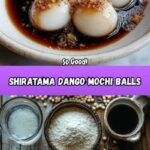
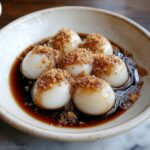
Shiratama Dango are traditional Japanese rice dumplings made from glutinous rice flours, offering a chewy and soft texture. These delightful mochi balls are boiled until they float and typically served with sweet kuromitsu syrup and roasted soybean powder (kinako), making for a comforting and authentic Japanese dessert perfect for sharing.
Ingredients
Scale
Shiratama dough
- 100 g glutinous rice flour (shiratamako)
- 90 ml water (approximately)
Mochiko dough
- 90 g glutinous rice flour (mochiko)
- 10 g potato starch (katakuriko) or tapioca starch
- 80 ml water (approximately)
For serving
- Dark brown sugar syrup (kuromitsu)
- Roasted soybean powder (kinako)
Instructions
- Prepare Shiratama dough: In a mixing bowl, combine 100 g of glutinous rice flour (shiratamako) and whisk to aerate and blend evenly. Gradually add about 90 ml of water while mixing until a smooth, pliable dough forms that is not too sticky or dry.
- Prepare Mochiko dough: In a separate bowl, mix 90 g glutinous rice flour (mochiko) with 10 g potato starch or tapioca starch. Slowly add approximately 80 ml water and knead until a similar soft dough consistency is achieved.
- Shape the dumplings: Roll each dough into cylindrical shapes, then cut them into small uniform pieces. Take each piece and gently roll into a smooth ball, pressing a small dent in the center of each to shape and improve texture.
- Boil the dumplings: Bring a pot of water to a rolling boil. Using chopsticks, carefully place the dumplings into the boiling water one by one to avoid sticking. Boil for about 3 minutes or until the dumplings float to the surface, indicating they are cooked through.
- Cool the dumplings: Prepare an ice bath with cold water. Using a slotted spoon, transfer the cooked dumplings into the ice water to immediately cool and firm up their chewy texture before serving.
- Serve: Drain the cooled dumplings and serve them topped with sweet dark brown sugar syrup (kuromitsu) and a sprinkle of roasted soybean powder (kinako) for an authentic and delicious finish.
Notes
- Use glutinous rice flours specifically labeled shiratamako and mochiko for best results; they have slightly different textures.
- The small dent in each ball helps the dumplings cook evenly and hold sauce better.
- Be careful not to overcook; dumplings will become too soft if boiled excessively.
- Serving with kuromitsu and kinako adds authentic sweetness and nutty flavor, but you may substitute with honey or maple syrup if preferred.
- These dumplings are best enjoyed fresh on the day of making but can be stored in an airtight container in the fridge for up to 1 day.